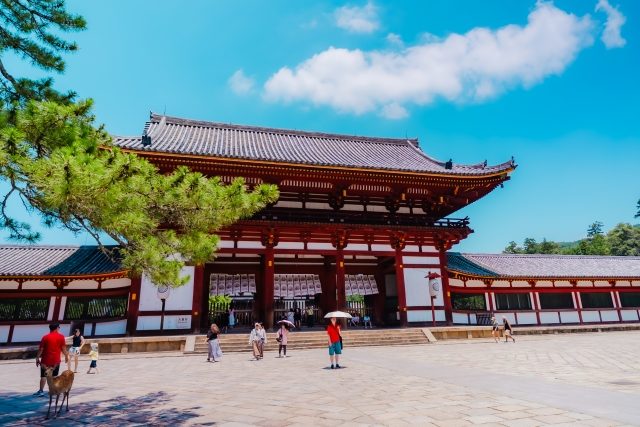
One of the most common questions I get from my students is: “Are Japanese people not religious?”
To many, Japan seems like a country full of temples, shrines, and festivals — yet, when you ask Japanese people directly, many will say “I’m not religious.” This can be puzzling, especially for learners from countries where religion is tied closely to personal identity.
📊 Looking at the Numbers
According to Japan’s Agency for Cultural Affairs, there are about 180 million “religious believers” in Japan. But wait — Japan’s population is only about 120 million!
So how is this possible? The reason lies in how these numbers are counted. Many Japanese people are both registered as shrine parishioners and as temple supporters, and may also have weddings in Christian churches. This leads to double (or even triple) counting.
In other words, belonging to a religious organization in Japan does not necessarily mean having deep personal faith. For many, religion is more about tradition and culture than belief.
Eight Million Gods (Yaoyorozu no Kami) — A Shinto concept embracing countless deities, each tied to nature or daily life.
Flexibility — It’s common for a family to have a Buddhist altar at home, celebrate Christmas, and visit a Shinto shrine for New Year’s.
Cultural Practices — Events like Hatsumōde (first shrine visit of the year), funerals, and weddings are often followed more for tradition than doctrine.
🌍 How It Differs from Other Countries
In many cultures, religion is closely linked to identity — saying “I am Christian” or “I am Muslim” reflects a strong personal belief. In Japan, you might hear:
“I’m not religious, but I go to shrines.”
This may sound contradictory, but for Japanese people, it’s perfectly natural. The focus is often on customs and community rather than belief systems.
💡 A Message for Language Learners
Understanding Japanese culture means going beyond the words. Religion in Japan is often blended, flexible, and unlabelled — a cultural “gray zone” that can surprise outsiders.
Also, be mindful of how you use the word religion in Japanese. While 宗教 (shūkyō) can refer to belief systems, it can also carry stronger connotations than in English, sometimes even sounding formal or institutional.
🌸 Closing Thought
Maybe Japanese people aren’t religious… but that doesn’t mean they don’t care about the spiritual side of life.
✨ Ready to Learn Real Japanese?
Start your journey into natural conversation with Kentaro – a native tutor who makes learning fun and effective.
👉 No credit card required. Flexible scheduling. Learn with a native teacher.
🕒 Flexible schedule ・ 💬 Conversational focus ・ 🌏 Lessons in English or Chinese